
Over the club’s eleven years, the rules, the game phases, the characters and the way the game is hosted have all changed. Little by little, the game has taken on a style of its own.
Below you’ll find the full guide: how to set up the game, which characters to include and how long it will take. I’ll also go through the mistakes hosts make and how to keep the game moving.
At a glance
- The goal
- The Mafia aims to eliminate all the citizens; the citizens aim to work out who the Mafia are and vote them out. The game goes on until one side is completely eliminated: there are no draws.
- Teams
- Roles are dealt in secret, in envelopes. There are always Mafia and citizens among them.
- Players and characters
- Ten is ideal: 3 Mafia, the Doctor, the Sheriff, the Lawyer and 4 ordinary citizens.
- Phases
- Day — introductions, a round of suspicions, open discussion and the vote. Night — the Mafia, the Doctor, the Sheriff and the Lawyer are woken in turn.
- Length
- ~40 min.
How the game works
At the start of each session, every player secretly receives a card with their role — in an envelope, for example. The roles always include the Mafia (the villains) and the citizens (the good guys).
If you end up on the Mafia side, your goal is to eliminate all the citizens without anyone suspecting you. If you’re a citizen, your job is to work out who the Mafia are and vote them out together.
The game goes on until one side is completely eliminated. There are no draws.
The core characters, our way




The Mafia. At night the Mafia wake up and decide together who to eliminate — usually communicating with glances or finger signals. Unlike the traditional rules, which have a lead mafioso — the Don — in our version all members of the Mafia are equal.
The Doctor. Wakes up at night and tries to guess which player the Mafia may have targeted. If the Doctor picks the same player, nobody dies. The Doctor can heal themselves, but can’t heal the same person two nights in a row.
The Sheriff. Wakes up at night and checks one player. The host shows them only that player’s side — citizen or Mafia. The host doesn’t name or show which citizen role they have.
The citizens. They sleep at night. Their main tool is the daytime vote.
Our club’s characters





The Lawyer. They have no special power at night. But during the day, if two or more players get the same number of votes, it is the Lawyer who decides which of them to save and which to eliminate.
Cupid. Before the first round even begins, Cupid chooses two lovers — and can choose themselves. The lovers find out who each other is, but don’t reveal their roles to one another.
If one of them is eliminated, then, as the story goes, the other’s heart can’t bear it, and they leave the game too. That way the citizens can lose two players at once.
But if Cupid happens to pick a member of the Mafia as one of the lovers, things look very different. The other lover, not knowing their partner is Mafia, will try to protect them. And if they do find out, they face a choice: sacrifice themselves or find a more graceful way out.
In a situation like this, ordinary logic no longer applies. The human factor and emotions come to the fore, and they will most likely drive the decision. That opens up new ways for the game to unfold.
The Bartender. Once per game, at night, the Bartender can get one player “drunk”. As the story goes, that player then reveals their true role.
So the Bartender is wise to target either the Sheriff, to team up with them later, or a member of the Mafia, to bring them out into the open as early as possible.
The Knight. Once per game, if the Mafia target the Knight at night, their armour saves them from elimination. If the Mafia target them a second time, in theory the Knight should be out.
But if the Doctor heals the Knight on that second night, it can seriously upset the Mafia’s plans.
Vanga. I change her power depending on the situation. One option: at night she picks a player whose vote won’t count in the daytime vote.
This character is best added when playing with more experienced players. Otherwise, especially with newcomers, Vanga — though on the citizens’ side herself — may end up playing against her own team entirely by accident.
The game phases
Day
- Deal the roles.
- Take turns introducing yourselves. Everyone tells a made-up story about themselves without giving away who they really are — while paying attention to what they feel.
- Round of suspicions. Take turns saying who you suspect and who you trust.
- Open discussion, no set order. Time to decide who to shoot.
- The vote. Everyone raises their revolver at the same time — at home, just a hand. When the host counts to three, everyone lowers it and points at the player they want to eliminate.
- The player with the most votes is out. If they were a citizen, you can give them a last word. If they were Mafia, see them away from the table and start the night.

Night
- Everyone puts on masks, and we turn the music up.
- Wake the Mafia, help them see each other, and ask who they want to eliminate.
- Wake the Doctor and ask who they want to heal and who they think the Mafia may have shot at.
- Wake the Sheriff and ask who they want to check and who seems suspicious to them.
- Wake the Lawyer so they can meet the host and understand their role.
- Wake the town and announce that the masks can come off.
How many players and how to assign roles
For the game’s dynamics, ten players is ideal. With a smaller group, keep in mind the details described below; with a bigger one, there’s a risk the game simply drags.
10 players: 3 Mafia, 1 Doctor, 1 Sheriff, 1 Lawyer and 4 ordinary citizens. If the Mafia win too easily, you can add the Knight. If you’re short on time but want to fit in one more session, you can add Cupid.
9 players: three options:
- 2 Mafia, the Doctor, the Sheriff, the Lawyer and 4 ordinary citizens — for experienced players;
- 3 Mafia, the Doctor, the Sheriff, the Lawyer and 3 ordinary citizens — for a faster game;
- 3 Mafia, the Doctor, the Sheriff, the Lawyer, the Bartender and 2 ordinary citizens.
With nine players and three Mafia, it’s important to encourage guests to act decisively and not stay in the shadows too long. They need to play boldly, even at the risk of being eliminated by the Mafia — otherwise the Mafia will quickly gain the upper hand.
7–8 players: 2 Mafia, 1 Doctor, 1 Lawyer and 3–4 citizens. If the group is inexperienced, it’s worth adding the Sheriff too. For experienced players, it’s better to leave the Sheriff out.
With this line-up the Lawyer is especially important and can save the game when it’s down to one citizen against one mafioso.
6 players: I don’t usually run games with six players, but if it comes to that, I recommend this setup: 1 Mafia, 1 Doctor, 1 Cupid and 3 citizens. A Sheriff would give the citizens too big an advantage, and Cupid, though on the citizens’ side, would actually help the Mafia more in this setup.
| Players | Mafia | Doctor | Sheriff | Lawyer | Special roles | Citizens |
|---|---|---|---|---|---|---|
| 10 | 3 | 1 | 1 | 1 | — | 4 |
| 9 | 2–3 | 1 | 1 | 1 | Bartender, if 3 Mafia | 2–4 |
| 7–8 | 2 | 1 | for inexperienced players | 1 | — | 2–4 |
| 6 | 1 | 1 | — | — | Cupid | 3 |
Session length
The game is unpredictable: if the Doctor gets lucky, for example, a session can run three to seven minutes longer. But statistically, you can usually expect roughly these lengths:
| Players | Length |
|---|---|
| 10 | about 40 minutes |
| 8–9 | 30–35 minutes |
| 7 | 15–25 minutes |
| 6 | 5–20 minutes |
Set aside twenty minutes to explain the rules.
The props
For a game at home, an ordinary deck of cards is enough — at night, players can cover their faces with their hands — plus a pen and a sheet of paper for the host.
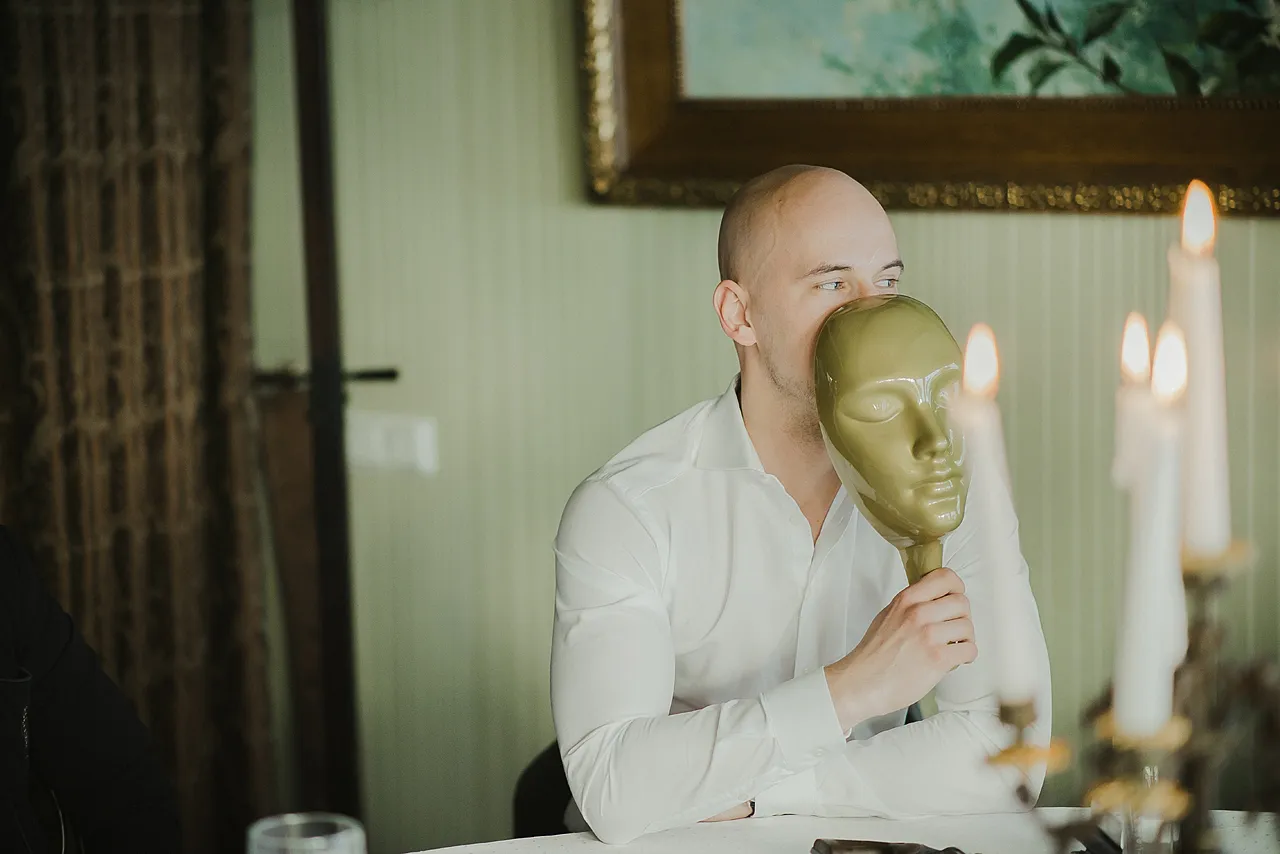
If you want something more atmospheric, get ten masks, ten metal revolvers so you can feel their weight, ten envelopes, ten character cards, candles in holders, a tablecloth, a round table and chairs.

The host will also need a pen, a clipboard and a template with fields for “who is the Mafia”, “who is the Sheriff”, “who is the Doctor”, “who is the Lawyer”, as well as “who the Mafia shoot” and “who the Doctor heals”. You’ll also need a separate sheet of paper to cover the template during the day so players don’t accidentally see the secret information.
And if there are more than ten guests?
It all depends on the kind of evening. If you want something cosy and warm, one table and one host are enough — anywhere from 8 to 30 people can play. For a company evening with more than 30 guests, you’ll need two tables and two hosts.
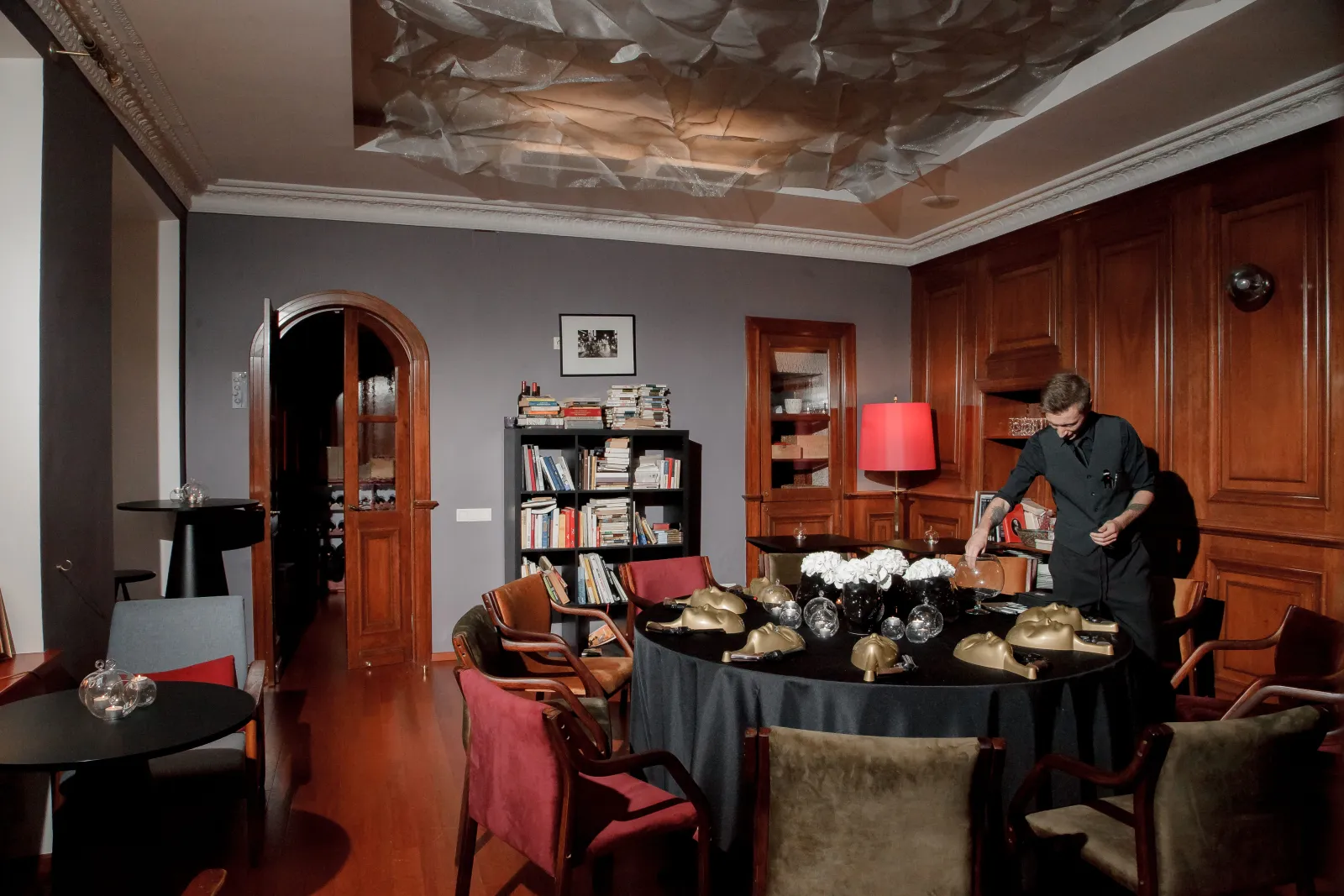
Three sessions per evening is ideal, with ten players in each. If there are ten guests in total, everyone plays three times; with thirty, everyone plays once.
During the first game, the other guests watch from the side — and judging by their feedback, they usually enjoy it too. In the second game, those who haven’t played yet join in, along with the first players eliminated. The line-up for the third game can depend on the situation and what people want.
A few tips for first-time players
Don’t try to figure everything out at once. Relax — let the host do the “straining”.
You can be eliminated for being too active or too passive. It’s just a game: find your own style and don’t be afraid to experiment.
Never give up, not even for a second. I’ve seen it dozens of times: most of the table suspects one person, then votes against someone else.
Remember that the game should bring people together. Respect the other players and never get personal — there’s no dignity in that tactic.
If you’ve lost track of what’s going on and feel confused, tune in to your feelings — especially what your body is telling you. The body never lies. If you feel uneasy when a particular player is speaking, your body may be reacting to a lie or manipulation.
Host mistakes
Being too rigid
What it looks like: the host holds strictly to the rules as written and penalises players for breaking them by accident.
What it leads to: guests get tense and afraid of making mistakes, and the emotional connection between players can even break down.
What to do instead: remember that the point of the game is to have a good time together, have fun, share energy and perhaps get to know yourself and the other players a little better. Flexibility is essential.
Decisions should depend on the situation: the players’ experience, their age, how engaged they are and even the occasion. At a company event for sixty, it’s important to keep the pace up with gentle discipline. At a private gathering of fifteen close friends, a cosy, relaxed evening matters more.
Sticking rigidly to the rules in every situation rarely pays off. In our format, the host should act as a coordinator — someone who helps people find their way in the game — and certainly not as the star of the show.
Where the host faces during the night
What it looks like: the host knows which side of the table the Mafia or the Doctor are sitting on and speaks towards that side.
What it leads to: players may be able to guess which side a particular character is sitting on.
What to do instead: speak while looking up at the ceiling.
A nuance: some players may use this as a game tactic even when the host does everything right. In that case, it’s important not to take it personally and to stay neutral — it’s part of the game, and you, as the host, are simply being used as a tool of manipulation.
Too much information
What it looks like: the host announces that the Mafia shot a player named Jonas, even though the Doctor saved him and nobody died.
What it leads to: players who think critically may conclude that Jonas is a citizen — which gives everyone playing against the Mafia an advantage.
What to do instead: say that there was a shootout during the night but nobody was hurt. From there, players can use the logic of the game and the roles they know to work it out for themselves: either the Doctor saved the Mafia’s target, or the Mafia shot the Knight.
Ending the game too early
What it looks like: the host ends the game as soon as the number of citizens and Mafia is equal.
What it leads to: players lose some of the emotions and surprise twists they play for.
What to do instead: leave room for the human factor: out of nerves or a wish to create intrigue, the Mafia may eliminate one of their own. It’s important to keep track of which citizen roles are still in the game — the Lawyer or the Doctor can change its course completely.
In other words, don’t rely on maths and logic alone. Always leave players room to play their own way — their game doesn’t have to be logical. If anything, quite the opposite.
Getting too involved, or keeping too much distance
What it looks like: the host tries to squeeze a certain level of play out of the game even though the players are new to it. Or, the other way around, the host stays on the sidelines and doesn’t step in at all, even when players are lost.
What it leads to: players may start worrying that they aren’t playing well enough, or lose the sense of comfort and ease.
What to do instead: let guests play however it comes out, especially the first time. If needed, gently guide them with questions or remind them what to pay attention to in a particular phase of the game.
Over-explaining the rules before the game starts
What it looks like: the host tries to explain every possible nuance and every way the game could unfold.
What it leads to: players get overloaded with information and tired out trying to remember it all.
What to do instead: tell guests up front that they don’t need to memorise everything and that you’ll go over the relevant rules when they come up in the game. At the start, explain the basic idea and the order of events without getting into the details.
Eliminated players stay at the table
What it looks like: the host doesn’t walk eliminated players away from the table.
What it leads to: the remaining players can get confused, and those who are out find it hard to stay quiet and stay out of the game.
What to do instead: if the eliminated player was a citizen, give them the chance to say a last word, thank them for playing and walk them away from the table.
Silence
What it looks like: the table falls silent: someone is nervous about drawing a Mafia role, someone doesn’t know what to say, someone feels shy.
What it leads to: nothing bad, really. Sometimes it’s even helpful to let players sit in silence — it makes it easier to focus on what they’re feeling inside. But it’s important to tell a deliberate silence apart from the awkwardness of not knowing what to do or say.
What to do instead: don’t try to interpret what’s happening. Any pause can be put to good use: for example, invite players to notice their physical sensations and think about what they might mean. Or ask, almost in passing, who they plan to eliminate by the end of the round.
Frequently asked questions
What if two or more players get the same number of votes during the day and the Lawyer is already out?
Hold a second vote, but this time players can only choose between those tied. If the votes split evenly again, nobody is eliminated and the game moves on to the night.
Can you reveal your role during the game?
It depends on the situation. For experienced players, being able to reveal a role can add emotional momentum to the game. When playing with newcomers, I recommend not allowing players to reveal who they are until they’ve been eliminated.
Why give an eliminated citizen a last word?
So they can express how they feel and share useful information — for example, who they healed, who they checked and what role they played.
How old do you need to be to play?
It depends on the person. I started playing when I was twelve.
Where can I play if I’m on my own?
I’m not running open live games at the moment. But if you’d like to play, message me on Telegram and I’ll set up a game for you on our online platform.
How do you start playing by intuition?
Set aside ordinary logic and pay attention to your pulse, your hands, your blood pressure, your heart, your stomach and your fingertips. Your body will tell you when you feel at ease and when you don’t. Notice who is speaking at that moment. What people say matters less than what you feel.

If the style of play described above appeals to you and you’d like a cosy evening with friends, message me personally.
If you’re planning a company evening and need full event organisation, take a look at our Services. There you can choose the services you need and see the exact price of your event.
And if you’re organising the game yourself using the guide above, I wish you luck and a wonderful evening.
Build your own event
Choose the number of game tables, the event date and the services you need.
Send a request